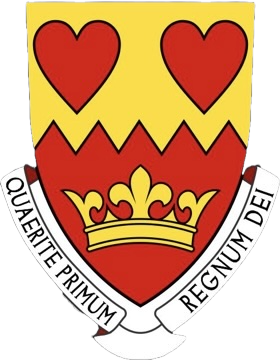
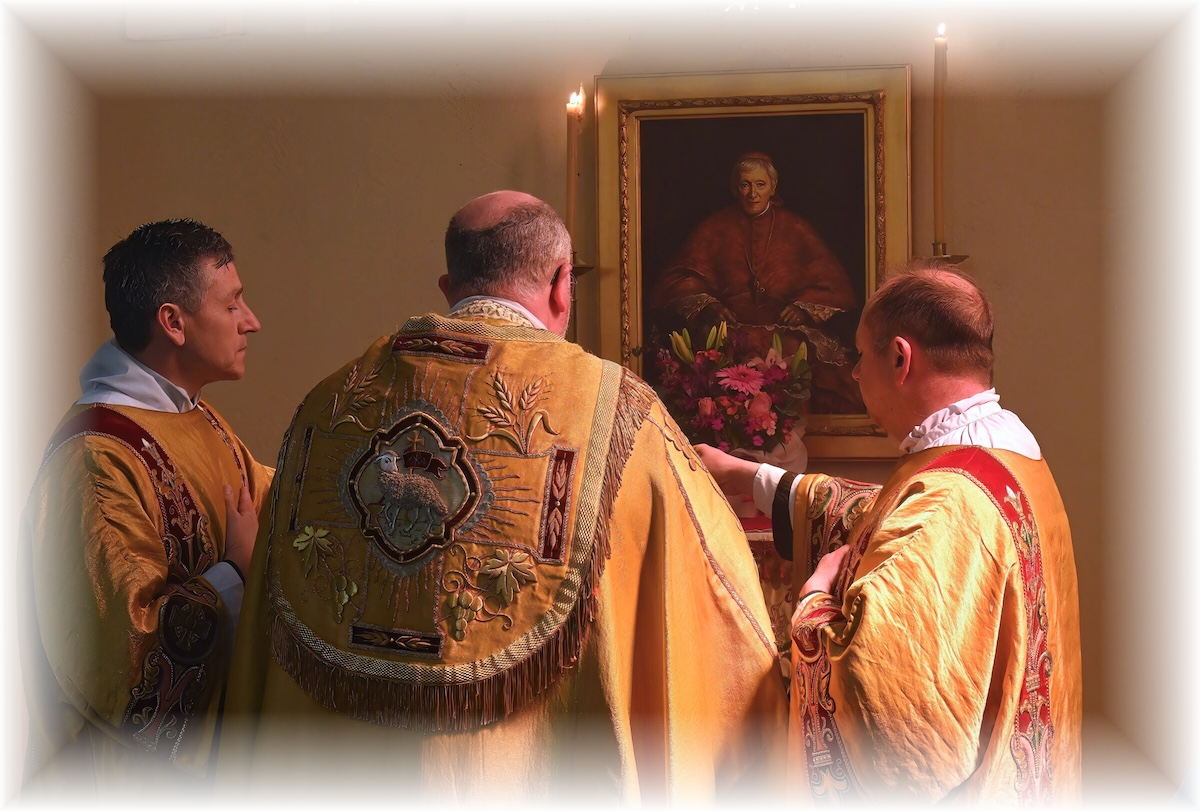
The community was first placed under the patronage of St John Henry Newman at the time of the Cardinal's beatification by Pope Benedict XVI on 19th September 2010. This patronage was renewed at the time of the community's establishment as a personal Parish, commencing 28th March, 2014. Newman's journey of personal conversion, his witness to the Truth and its claims, his love of Christ and the Church, and the authenticity and relevance of his teaching in our age of confusion, all urged his patronage. St John Henry's spirit is summed up in our motto (taken from Christ's sermon on the Mount): Quaerite Primum Regnum Dei (Seek first the Kingdom of God). The Parish formally adopted a coat of arms on 12th August, 2018. We are grateful for Richard d’Apice AM FSHA aih, President of The Australian Heraldry Society, for designing our arms and to Mr Sandy J Turnbull for the digital rendering. The blazon is as follows: Arms: Per fess dancetty Or and Gules in chief two hearts and in base an ancient crown counterchanged. In plain English: A shield divided horizontally by a division line having a repeated pattern of chevrons the top half being gold and the lower half being red. The top half is charged with two red hearts and the bottom half is charged with a gold ancient crown. Motto: Quaerite primum regnum Dei (Seek ye first the Kingdom of God). The hearts reference the personal coat of arms of our patron, Blessed John Henry, Cardinal Newman. The ancient crown proclaims the Kingship of Christ, and the fleur-de-lys of the crown honours Mary Immaculate and ever-virgin
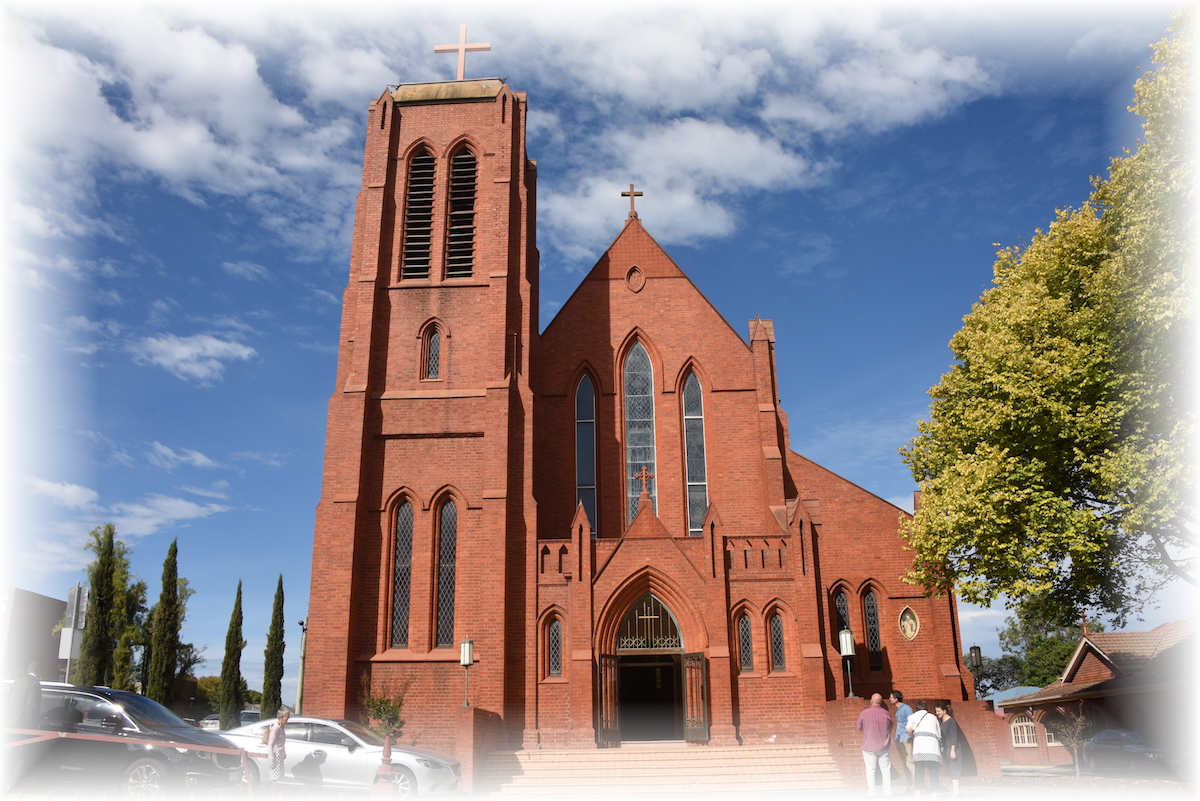
St Aloysius’ Church was built in 1923-24 at a cost of £13,200 to the designs of Bartholomew Moriarty, also known as the builder who constructed Newman College for the architect Walter Burley Griffin. The foundation stone was laid on 18 August 1923 and the building completed in May 1924. It is constructed in red brick, with terra cotta tiles for the roofs. The style is a simplified version of Early-English Gothic, with the nave and apsidal sanctuary placed under a common roof ridge. The building consists of a nave of seven bays, with aisles and clerestory, sanctuary, side chapels and sacristies, one of which was initially built as a nuns choir. Sadly the impressive 140ft high spire which crowned the tower to the left of the main facade was demolished early in 1990 owing to delamination of the concrete.
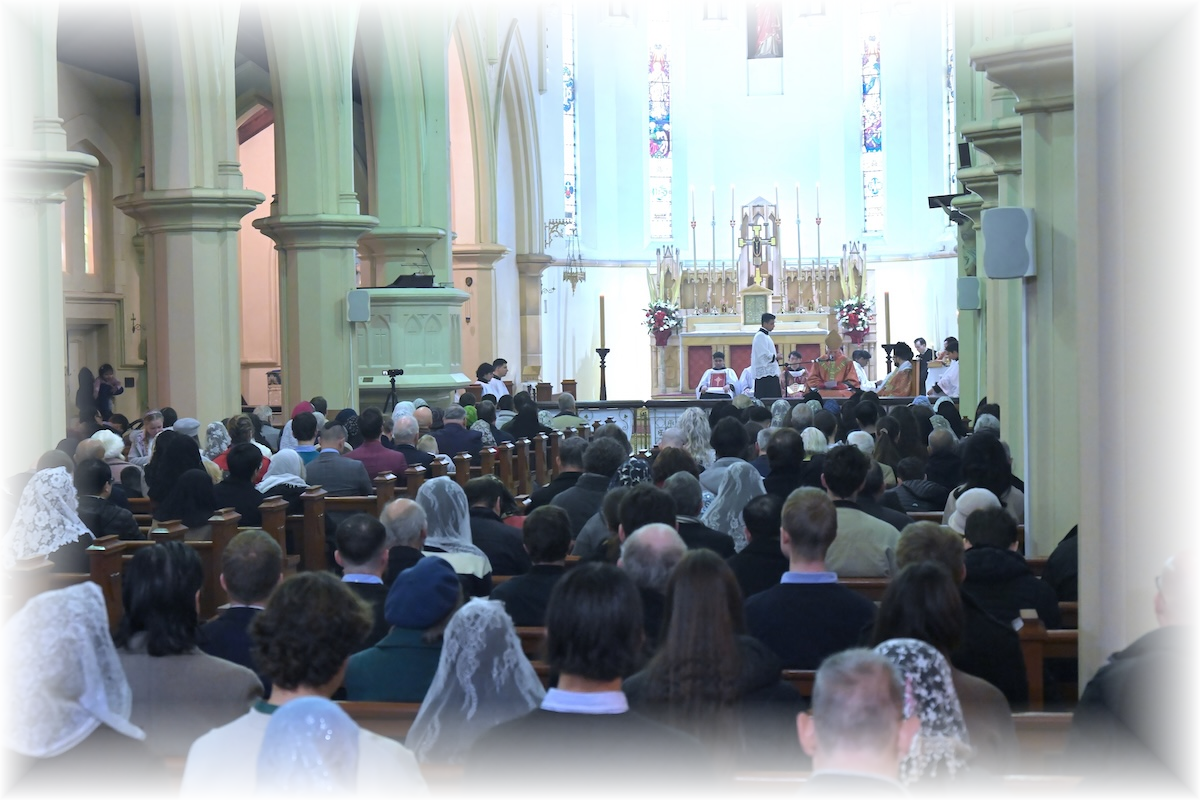
Newcomers to our Masses are always welcome. If you are familiar with the Traditional Latin Mass, or even if not, Latin/English Missals are provided so you can easily follow the proceedings of the Mass. They contain the liturgy in Latin on one side of the page and in English on the other. Both the Missals and hymn sheets are available in the vestibule at the rear of the Church. Here you will also find copies of our weekly bulletin containing news of events and happenings within our community. Please feel free to take a copy home with you.
If you wish to be able to follow the Propers of the Mass for every day of the liturgical year, (the parts of the Mass that change during the liturgical year) you might consider purchasing a
-
Saint Andrew's Daily Missal (reprint of the 1945 edition)
-
New Roman Missal by Fr. F.X. Lasance (reprint
of the 1945 edition)
-
Saint Joseph Daily Missal (reprint of the 1953
edition)
- Baronius
Press 1962 Missal.
Missals are also usually
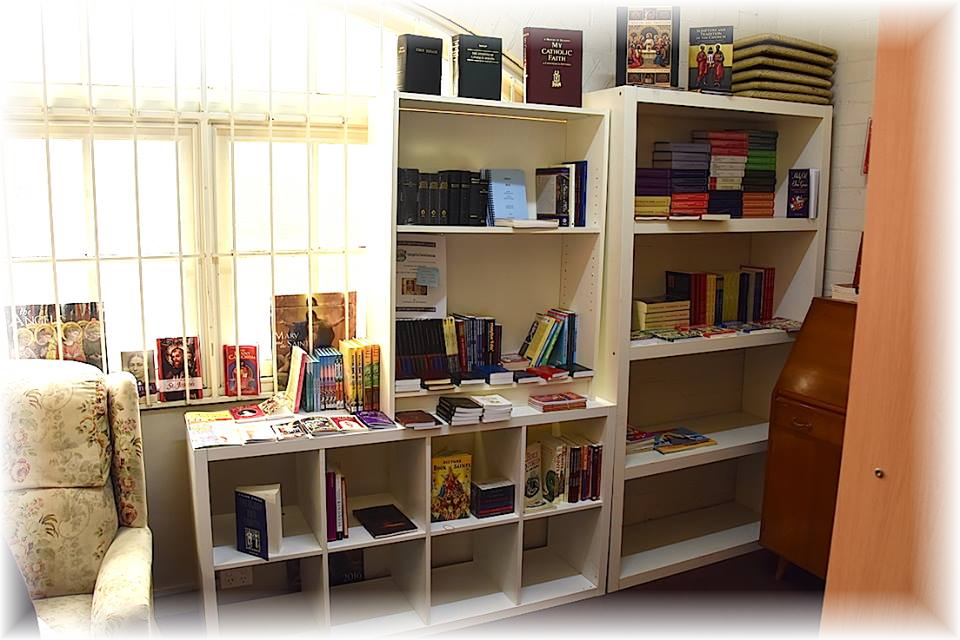
available in St John Henry's book room in Maryvale, the presybtery next to the church. The room is located inside the tea-room at Maryvale, and is open regularly after the morning Masses on Sunday. There is a diverse selection of books available, including MIssals, calendars and diaries with lives of the Saints.